 Facebook
 Twitter
 Soundcloud
 Youtube
 Rss




This essay appears as part of a special series supported by the ANU Malaysia Institute
• • • • • • • •
Malaysia’s political arrangement changed after the 14th General Election (GE14) in 2018, when the Barisan Nasional (BN) coalition was defeated for the first time since independence. Since then, the call for “Perpaduan Ummah”—unity of the Muslim community—has surged, particularly by the Malay–Muslim political parties, targeting the Pakatan Harapan (PH) government over perceived threats towards Malay-Muslim privileges and status and its image as being dominated by non-Malays.
The polarisation is especially acute given almost all parliamentary opposition in Peninsular Malaysia is from Malay-Muslim parties. These gave rise to the Muafakat Nasional (MN) (“National Cooperation”) coalition, which germinated a year after GE14 with UMNO and the Malaysian Islamic Party (PAS) signing the Piagam (“charter”) of MN on 14 September 2019. Then, in 2020, just before the COVID-19 pandemic hit, a new, almost makeshift coalition formed a federal government following the infamous Sheraton Move, and later called themselves Perikatan Nasional (PN).
Part of the public legitimisation of PN was, indeed, its high Malay-Muslim composition. After GE15 in 2022 produced a hung parliament, the PH-led unity government under Prime Minister Anwar Ibrahim commanded a simple majority, which included UMNO. Following PAS’s breakup with Bersatu in 2026, PAS has continued to advocate for Perpaduan Ummah alongside UMNO, even though UMNO remains part of the ruling coalition with PH.
Here I explore the roots and evolution of the ideal of Perpaduan Ummah and how they were couched within PAS’ and UMNO’s political discourses. Alongside the short-term gain of winning elections, a deeper commitment lies in ideological justifications: from PAS’s more Islamic-based ones to UMNO’s developmentalist ideals. The appeal of portraying an image of “leading and uniting the ummah” is so central to Malaysian politics today that Anwar’s government flirted with the idea too, albeit with limited success. I conclude by briefly exploring the dim prospects for Anwar’s government in the next elections.
The genealogy of UMNO–PAS unity
Achieving Malay unity has always been an asymptotic effort in Malaysian partisan politics. Underscored by historical rivalries between the two biggest Malay-based parties, PAS and UMNO, in their competition to win support in Malay-majority constituencies, efforts to consolidate religio-ethnic unity have frequently been short-lived, if not meeting with downright failure.
The latest incarnation, termed Perpaduan Ummah, has become a concept often invoked in mainstream political discourse, pointing to the Islamic undertones of Malay-Muslim unity under a consolidated political front. As such, PAS and UMNO respectively flirt with the ideal and attempt to realise a form of negotiation and coexistence as a united informal coalition, notwithstanding the awkwardness of them being political enemies in the last seven decades. In light of contemporary developments in Malaysian politics after 2018, the perpaduan ideal sells well, at least when translated into votes during elections. As documented in the subsequent by-elections, state elections, and GE15 in 2022, the Malay-Muslim voter base for the ideal is rising.
As a discourse, the Perpaduan Ummah ideal can surely be formed with various permutations. However, why is its most appealing form a cooperation between PAS and UMNO?
At the grassroots level, the Malay-majority constituencies are connected to party apparatuses from either PAS or UMNO—recall the incidents of differentiating mosques between Masjid PAS (“PAS mosque”) and Masjid UMNO (“UMNO mosque”) prevalent in the 1980s and 1990s. In rural areas, even funeral services are provided by party activists (now expanded to urban areas too). Furthermore, right-wing NGOs such as Ikatan Muslimin Malaysia (ISMA), media influencers such as Ridhuan Tee, and grassroots movements such as Buy Muslim First (BMF) play a role in augmenting the discourse within public consciousness too. If UMNO and PAS, illustrative of the two biggest Malay-Muslim groups can be united, surely it connotes a real unity—hence Perpaduan Ummah.
Pundits often cast the trend as yet another marker of identity politics, race-based ideological consolidation, and a response against a perceived collective threat. But how did it develop and mature as a viable and overarching political discourse, being hailed as agreeable to once fierce enemies? Is an identity explanation enough? If identity is the explanation, PAS and UMNO should have never fought in elections since 1956, or at least they should not have broken up following the event in which PAS left the ruling coalition of BN in 1977. Something cuts deeper in order that identity and ethnoreligious affinity must be at play in this context.
The idea of unity lived on even though the “host” of the unity changed. In the experiment between UMNO and PAS between 1973 and 1977, when PAS joined the BN coalition, the “host” was UMNO as the biggest party, and PAS was orbiting it. Forces of attraction existed that held them together, but not for an unlimited period of time akin to a centripetal force. However, following the creation of Muafakat Nasional in 2019, the “host” and the one orbiting it started to change, with PAS having a greater centre of gravity due to their apparent rise in national politics till now. PAS held 18 Parliamentary seats in GE14, and UMNO won 54 seats. Come GE15, PAS gained more than twofold at 43 seats and UMNO only won 26 seats.
At the moment, it is safe to say that PAS has secured itself as the “host” and UMNO is struggling between reluctantly orbiting PAS and garnering sufficient political and social capital to wrest their former position as the legitimate refuge of the Malays back. Reference to by-elections and state elections following GE15, especially the latest state elections held in 2026, shows that the possibility of both parties working together in an evolved configuration of a compromise seems on the table.
Referring to a series of engagements, media statements, and “friendly fires” made during the UMNO General Assemblies and PAS Muktamar since 2019 till 2026, an image of a “distant yet loyal” political cooperation emerges, signalling an effort to mutually consolidate power together while still competing for a broader base of Malay-Muslim support.
Malay unity as Islamic unity as ideology?
The Malaysian Federal Constitution defines a Malay as a person habitually speaking the Malay language, practicing the Malay culture, and embracing the religion of Islam. Supported by this equation, conceptualising “Malay Unity” as equal to “Islamic unity” can be sustained, and through linguistic devices and clever use of words, ideas such as this can be quite easily couched in everyday parlance, religious sermons, party propaganda, and even an almost apocalyptic vision of the society.
As a nation, consociationalism has always been a useful compromise in the application of partisan politics, as observed by Azizuddin Mohd Sani, Nadzri M. Noor, AJ Nori, and others. Historically, support towards political parties is configured and fragmented based on the racial divisions, with UMNO/PAS vying for the support of majority Malay-Muslims, DAP/MCA among the Chinese, MIC and other smaller parties the Indians, and local East Malaysian parties in Sabah and Sarawak. With the almost strict racial division becoming more fluid following GE14, it was tempting for the main Malay-based parties to form a coalition vying for a majority of Malay support in an attempt to win elections.
Even though the talks and conceptualisation of Malay unity have been one of the recurring themes in Malaysian history since independence, the political genesis of its latest incarnation between PAS and UMNO arguably lies in the aftermath of GE12 in 2008. Pakatan Rakyat (PR), the opposition coalition made of a loose cooperation between DAP, PAS, and PKR, succeeded in making inroads in national politics by defying BN’s two-thirds majority and wresting five states from the government. Despite being able to fairly defend their respective seats, UMNO as the dominant party of the ruling coalition felt threatened, and the discussions of the decline and deterioration of Malay-Muslim political power emerged more significantly.
PAS, on the other hand, still kept the PR coalition intact at GE13 in 2013, but not for long. Its split with DAP over several issues led to a breaking down of the PR coalition in 2015. In 2016, the PR coalition was reincarnated into Pakatan Harapan (PH) with the founding parties of PKR, DAP, and Amanah and later, Bersatu and UPKO. To face GE14 in 2018, PAS decided to contest the seats alone. In hindsight, this decision to contest alone by not attaching itself to any coalition proved to be a useful litmus test for PAS’ own durability in Malaysian politics, especially in the Malay-majority states. Not only did they manage to retain Kelantan with a bigger majority and gain Terengganu, they secured 18 seats in federal parliament alone.
Shortly afterwards, PAS and UMNO decided to form Muafakat Nasional (MN) with an explicit pro-Malay agenda in contrast to the avowedly multiracial PH government. In public discourse, the “us versus them” politics that perceived non-Malays as having tacit agendas to challenge Malay authority has just been lent a new political ally.
Following the racial lines of partisanship, DAP and PKR should be rivals against MCA and MIC. But in terms of non-Malay agendas, an oft-repeated allegation is that non-Malay politicians will prioritise their agendas first before their own parties. Such a way of thinking is not exclusive to political actors within the MN or PN coalition alone but is amplified by other non-governmental organisations too such as Ikatan Muslimin Malaysia (ISMA).
It can be argued that the idea of Perpaduan Ummah is something embedded in majoritarian politics represented by PAS and UMNO since their inception—by consolidating support from the Malay majority. After all, as historians such as Farish A. Noor observed, PAS has its own share of being a Malay nationalist party. This consolidation of support, as expected, can produce significant political gains, but its basis also lies somewhere else, namely in ideology. For decades a prolific author, Abdul Hadi Awang has churned multi-volume work exploring the history of Islam and commenting on the Quran. In some of his writings, he has been consistent in endorsing the idea that the dominant race, namely the Malays in Malaysia, should unite and lead in politics. He backed this idea up with references from the biography of the Prophet and prominent Islamic scholars.
The same goes with Mahathir’s vision of Malay development, where the ideal lies in the fact that the majority Malays must unite in politics and possess majority control. Even though the two had been political rivals for decades, their ideas found convergence in Malay-Muslim dominance albeit with a distinct foundation or focus, one on Islam, the other on developmentalism.
Albeit traditionally relying on the race-based political parties, and currently on DAP or PKR, the non-Malay and non-Muslim societies—especially in the Peninsula—seem to have a comparatively limited outlet to further their political intentions. However, a more current development might prove to be useful to PAS in getting support from non-Muslim communities. PAS opened a non-Malay branch, Dewan Himpunan Pendukung PAS (DHPP) in 2004, with membership approaching around 80,000 members as of 2026.
These non-Muslim members are regarded as Associate Members of PAS, and starting from the Muktamar of 2026 held in Kelantan, they can debate suggestions and bills in the main session of the Muktamar. In hindsight, this move can be considered an innovative development in Islamist politics—even at the global level—where non-Muslims are welcomed to join without converting to Islam and keeping their own faith. While it serves as one available political outlet among non-Malays, it can also serve as one of PAS’s methods of navigating the multiracial realities in Malaysia.
Whither perpaduan?
An interesting yet not-so-exhilarating sight happened during Muktamar PAS 2026. Asyraf Wajdi, Akmal Saleh, and other UMNO members attended and voiced support for PAS’s Malay-Muslim agendas while remaining in Anwar’s government. They joined Muktamar PAS on 4 and 5 Sept 2026 as guests of honour, while Afnan Hamimi, PAS Youth Chief, joined Perhimpunan Pemuda UMNO on 10 September 2026 as guest of honour. At least at the elite level, the upper echelons of both parties seem to already be in agreement, with talks of mutual and equitable seat distribution for the next elections.
In the 2026 UMNO General Assembly (PAU), Zahid Hamidi explicated the term “Rumah Bangsa” as a broad conceptualisation of Perpaduan Ummah. There are four conditions for the perpaduan ideal to succeed: (1) intention must be “pure”; (2) UMNO must be the centrepiece and base (“tiang seri,” “asas”); and (3) arrangements must be flexible (UMNO deputy president Mohamad Hasan commented that UMNO must stay with BN, but also actively work with PAS, rejecting a possible future similar to them being part of the PN-led government in 2020); (4) UMNO prefers not to orbit other parties, no dependency on others. In short, UMNO should protect others, not be protected.
For Zahid and many more UMNO leaders, the Sabah election in 2025, and the Johor and Negeri Sembilan (NS) elections in 2026 recorded exponential gains for BN candidates, with DAP and PKR being the biggest losers. As such, interested groups used this precedent as a battle cry: if the Ummah is united, nobody can stop us! At around the same time, DAP Secretary General Anthony Loke received flak on social media for a joke made by a PH supporter, calling him “the fifth Undang” due to his comments on the NS throne controversy beginning in April 2026.
Loke lost partly due to the perception that he was challenging a traditional Malay institution, as NS had four Undang (hereditary territorial chiefs) under the customary system. The public and pro-Malay social media influencers are much less harsh towards UMNO and BN, who interfered in the NS throne issue. The identity of politicians does play a role.
Anwar’s Malay agenda
Politically, Anwar is in a precarious position akin to political quicksand. Following the growing popularity of Malay-Muslim based parties and their formal consolidation in the recent events, it is unlikely that Anwar can retain a grip on Malay-majority areas or even marginal seats with significant Malay populations.
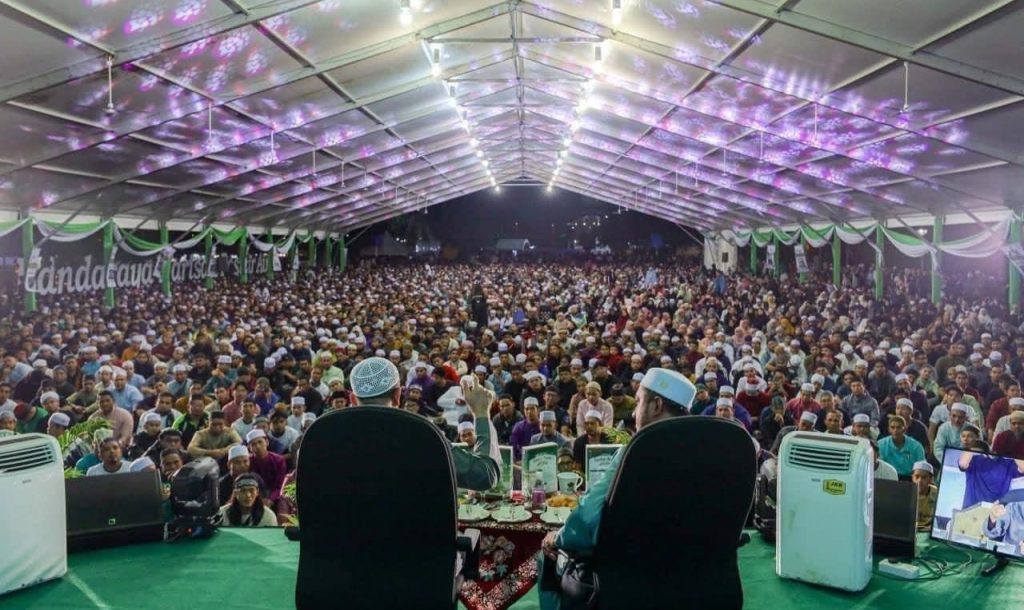
Countless efforts have been made by Anwar’s government to influence the local Malay community leaders, most notably local religious leaders, by having many programs that speak to the traditionalist pondok community. For example, the Festival Turath Islami Selangor 2024, 2025, 2026, Festival Turath Islami Malaysia 2026, and Majlis Sama’ Sahih Bukhari, which brought major thought leaders in traditional Sunni Islamic institutions (Ali Gomaa, Idris al-Fihri, and others), have attracted thousands of participants and were held using government funds and institutions. Known for centuries as the bastion of the Southeast Asian-style Shafi‘i school and the Ash‘ari theology, Anwar’s effort to appease the pondok community by bringing high profile scholars of both schools to Malaysia is demonstrating limited efficacy at best.
Besides, Anwar promised more funds for rural pondok institutions and encouraged their modernisation and integration into the official educational route so that their certificates could be recognised. To achieve it, the government established the Majlis Penasihat Pondok dan Turath Malaysia (Pondok and Turath Advisory Council) with Ali Gomaa and Idris al-Fasi as its members. Some influential, famous, seasoned but relatively young tok guru pondok such as Sheikh Wazir al-Makki, Nazrul Nasir, Ahmad Ridouddin, and others have attended these events and given positive comments on Anwar’s activeness to embrace their institutions and the orientation of Islam they represent.
It is not difficult to understand Anwar’s political motives here, since the pondok commands symbolic and spiritual authority in rural Malay communities, and a huge majority of pondok in Peninsular Malaysia explicitly support PAS. The institution is a form of cultural capital in itself. Anwar’s previous leadership of ABIM and his involvement in international Muslim youth networks since the 1970s has proven to be indispensable social capital, especially his access to some of the most high-profile scholars in the Sunni Islamic world. All of the aforementioned programs were delivered at the prime minister’s official residence and at Masjid Putra, Putrajaya.
Political financing: Malaysia’s hardest reform of all
Disagreements over details, and vested interests, delay reforms
As Anwar descends slowly into political quicksand partly of his own making, the party that stands to gain is PAS. UMNO might see the Perpaduan Ummah arrangement with PAS as its lifeboat—when things go wrong with PH, it can buoy itself with PAS’s Malay-Muslim base. They could not be more wrong: PAS sees the perpaduan not as a method to save itself from oblivion, but to draw the enemy near in order to devour it. There can, indeed, be only one tiger on a mountain.